
You usually only think about a charging cable when it stops working at the worst possible moment - 2% battery, heading out the door, and the phone is barely charging unless the cable is held at a strange angle. That is exactly why choosing the best charging cables for Android matters more than most people expect. A cheap cable can be slow, unreliable, and in some cases hard on your charging port. A decent one saves time, lasts longer, and keeps daily charging simple.
What makes the best charging cables for Android?
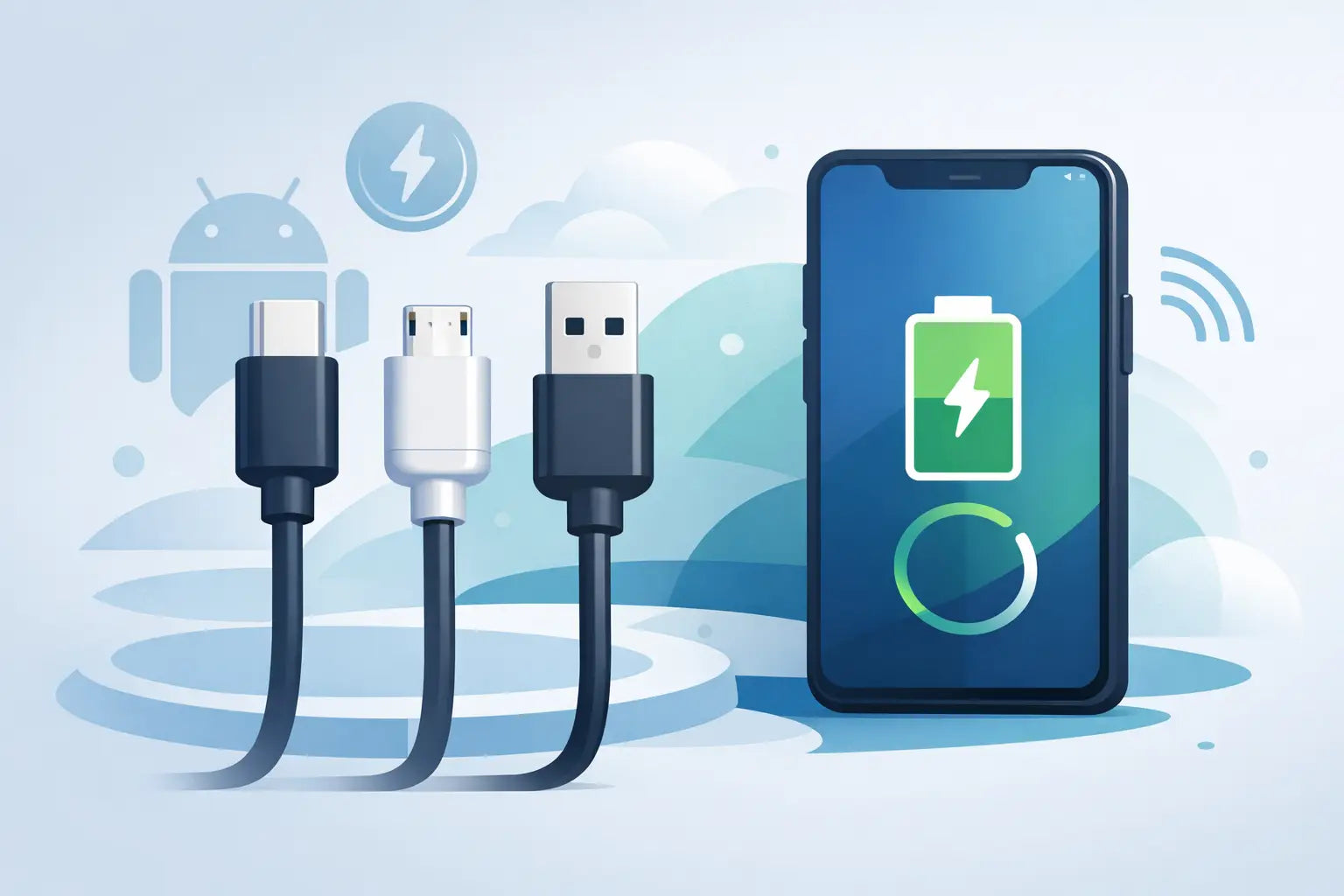
For most Android users, the right cable comes down to three things: the correct connector, proper charging support, and build quality that can handle daily use. Most newer Android phones use USB-C, while some older models still use Micro-USB. If you buy the wrong end, it sounds obvious, but it happens more often than you would think.
After that, charging speed matters. Not every cable can carry power at the same rate. Some are built for basic charging only, while others can support fast charging if your phone and charger also support it. That last part is important - a fast cable on a weak plug will not magically give you top speed. The full setup has to match.
Build quality is where the better cables separate themselves from the bargain-bin ones. Connectors should fit firmly without wobbling. The outer jacket should not feel thin or brittle. Strain relief near the ends matters as well, because that is where most cables fail first.
USB-C vs Micro-USB
If your phone is from the last few years, there is a strong chance it uses USB-C. It is reversible, more durable in normal use, and generally better for fast charging. It has become the standard across most Android brands including Samsung, Google, Xiaomi, OnePlus, Oppo and many others.
Micro-USB is still around on older phones, power banks, headphones, speakers, and budget devices. If you are replacing a cable for one of those, make sure you are not assuming everything is USB-C now. Plenty of households still need both.
If you are not sure, check the charging port before buying. Forcing the wrong connector is one of the easiest ways to damage a port, and that turns a small accessory purchase into a repair job.
Fast charging is not just about the plug
One of the biggest misunderstandings around Android charging is that any cable will do as long as the wall charger is powerful. In reality, the cable plays a big part. Some cheaper leads are only suitable for lower power output, which means slower charging even when your adaptor is capable of more.
This matters most for people using Samsung Super Fast Charging, fast-charging Xiaomi or Huawei devices, or newer Android tablets that draw more power than an older phone. If the cable is not rated properly, you may get basic charging instead of the faster speeds your device can handle.
Data support can matter too. Some cables charge only, while others handle data transfer as well. If you ever connect your phone to a laptop, transfer photos, back up files, or use Android Auto, it is worth buying a cable that can do both reliably.
Cable length matters more than people think
A one-metre cable suits most people for desks, bedside tables, and everyday charging. It is usually the best balance between convenience and stable performance. Go much longer and you may notice slower speeds or more wear over time, especially with poorer quality cables.
That does not mean long cables are a bad idea. A two-metre cable can be very handy if your socket is in an awkward spot or you want to use your phone comfortably while charging. You just need to make sure it is well made and designed for the charging standard you need.
Short cables have their place too. They are useful in the car, with power banks, or for keeping things tidy in a bag. If your main priority is portable charging without a mess of cable, a shorter lead can be the better choice.
Braided or standard plastic?
Braided cables are popular for good reason. They usually hold up better against daily bending, being stuffed into bags, and getting pulled across desks or kitchen counters. For many people, they simply last longer.
That said, not every braided cable is automatically better. Some look sturdy but still have weak connector joints. A standard rubber or TPE cable from a decent manufacturer can outperform a flashy braided one if the internal quality is better.
The best approach is to look at the full cable, not just the outer finish. Check whether the connector ends feel reinforced. If the cable bends sharply right where the plug meets the wire, it is more likely to fail there first.
When a cheap cable is fine - and when it is not
There is nothing wrong with wanting a reasonably priced cable. Most people are not looking for the most expensive option on the shelf. They just want something that works, lasts, and does not need replacing next month.
A lower-cost cable can be perfectly fine for a spare in the car, occasional use in the office, or topping up an older phone overnight. Where it makes sense to spend a bit more is on your main everyday cable, especially if you fast charge, use your phone heavily, or are tired of replacing broken leads every few months.
The real cost of a poor cable is not only the cable itself. Slow charging, unreliable connection, failed data transfer, and possible charging port wear are all part of the picture. Paying slightly more once can be cheaper than buying three poor ones in a row.
Best charging cables for Android by use case
If you want one cable for daily home use, a good quality USB-C to USB-C or USB-A to USB-C cable in a one-metre length is usually the safest choice. It suits most charging setups and is practical without being awkward.
If you need a cable for travel, look for something durable and easy to pack. Braided cables often do well here, especially if you are throwing them into a backpack with chargers, earphones, and keys.
For the car, shorter is often better. You avoid tangles, reduce strain, and keep the setup neater. If you rely on Android Auto, buy a cable known to support stable data connection as well as charging.
For tablets or larger Android devices, make sure the cable supports higher power delivery if needed. A cable that is fine for an older handset may not be the best fit for a modern tablet.
And if you still have older kit at home, keep a decent Micro-USB cable rather than relying on whatever old lead is left in a drawer. Those older cables are often already half worn out.
Signs it is time to replace your cable
If your phone only charges when the wire is bent a certain way, replace the cable. If charging cuts in and out, replace it. If the connector feels loose, the outer jacket is splitting, or the cable gets unusually warm, stop using it.
Sometimes customers assume the phone port is damaged when the real issue is the cable. Other times, continuing to use a failing cable puts extra stress on the port. Swapping in a known good cable is one of the quickest ways to rule out the problem.
If you are buying for a household with multiple devices, it also helps to label or separate cables by type. It saves wear from people forcing the wrong lead into the wrong device and makes day-to-day charging less frustrating.
What to look for before you buy
Start with compatibility. Make sure the connector matches your device and charger. Then check the charging support. If your phone supports fast charging, buy a cable that is rated for it rather than assuming all cables are the same.
Next, think about where you actually use it. Bedside, car, office, travel, or power bank use can all favour different lengths and materials. There is no single best option for everyone, which is why it makes sense to buy based on your routine rather than the most hyped spec.
Finally, buy from a seller that knows the difference between a basic cable and one that suits your device properly. That sounds simple, but good advice saves time. For many people, especially if they need a replacement quickly, getting the right cable first time is the whole point.
At First Help Tech, that practical side matters. Most customers are not shopping for fun - they need a cable that works, charges properly, and does not let them down after a week.
A charging cable is a small purchase, but it has a big effect on how easy your phone is to live with. Pick one that fits your device, supports the speed you need, and is built for the way you actually use it, and you will notice the difference every single day.