

What if the most sustainable next step for a faulty device isn’t replacing it, but finding out whether it can be repaired? Sustainable electronics repair Ireland starts with a practical assessment, not an assumption that every fault means a device has reached the end of its life.
A replacement can feel like the simplest option, especially when you’re unsure what has gone wrong or whether a repair is worthwhile. First Help Tech repairs smartphones, tablets, laptops, PCs and smartwatches across Ireland. This guide explains how to weigh repair against replacement based on the fault, the device’s condition and how useful it may be afterwards.
We’ll also look at how repair can extend a device’s useful life, when replacement may make more sense, and what to do if a device can’t be repaired. First Help Tech offers screen and battery replacements, hardware and software troubleshooting, and other repairs. You can book online or request a quote.
Key Takeaways
- Repair, reuse and recycling each have a different role. Consider them in a practical order before deciding what to do with a device.
- Describe the fault and check your device’s condition before deciding. An assessment can help you compare the options with more confidence.
- Ask for a clear quote that explains the proposed repair and any uncertainty, so you can weigh it against replacing the device.
- First Help Tech repairs devices across Ireland, with online booking and quote requests. Accessories such as chargers, cables and cases can support everyday device use.
Sustainable electronics repair in Ireland: why repair can be the first step
Sustainable electronics repair in Ireland starts with finding out what has failed and whether a practical repair could keep the device useful. A cracked screen, charging issue or battery fault doesn’t automatically mean a device has reached the end of its life. An assessment can clarify the problem before you decide what to do next.
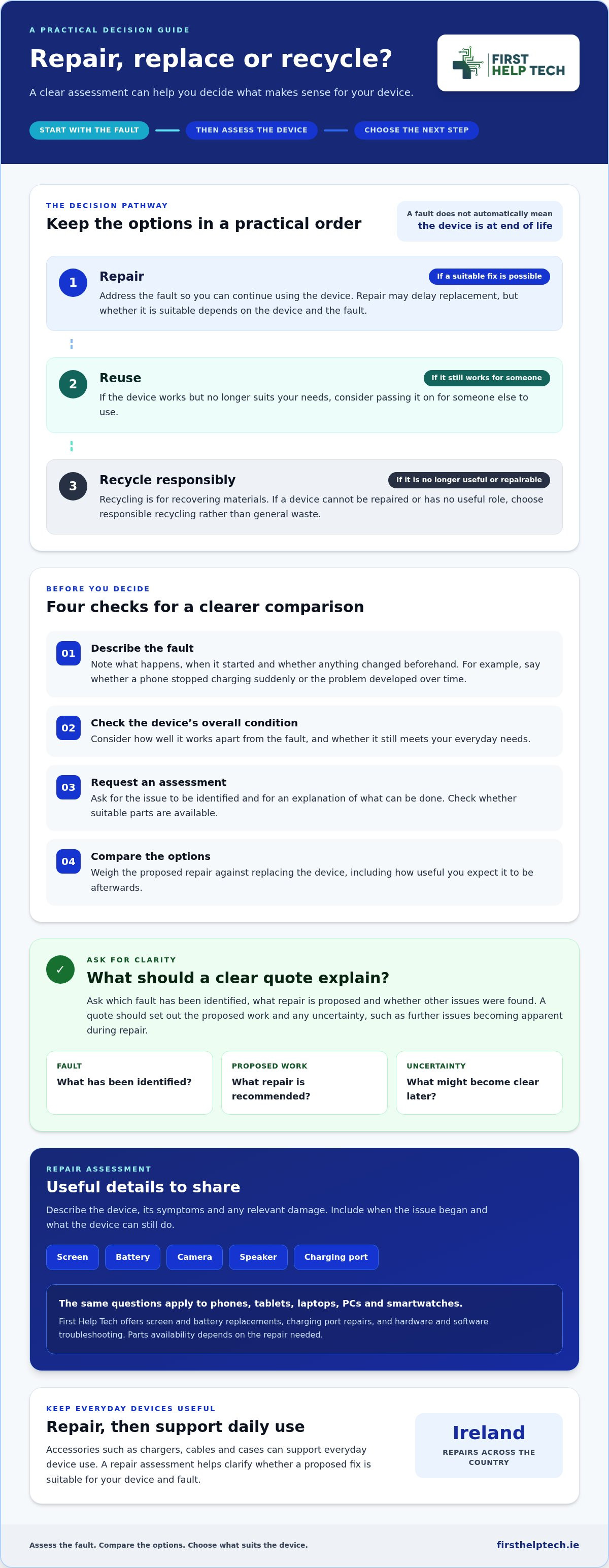
Repair, reuse and recycling are different stages, not interchangeable choices. Repair addresses a fault so the current owner can continue using the device. If it still works but no longer suits your needs, reuse may mean passing it on for someone else to use, or selling it to buyback services such as Phones4cash LLC to give devices a second life. Recycling is for recovering materials from equipment that is no longer useful or repairable. Keeping those steps in order helps avoid treating disposal as the only option.
Repair can delay replacement, but suitability depends on the device and fault. Repair isn’t automatically the better environmental choice in every case. The outcome depends on the circumstances, and comparisons need reliable evidence.
When is repairing an electronic device a sensible option?
Look at the fault alongside the device’s overall condition. A damaged screen or a battery that no longer serves your needs may be worth assessing if the rest of the device works well and you expect to keep using it. The same repair-first logic extends to workplace technology, where maintenance specialists like AllTech help keep essential office equipment operational. Consider whether the device still meets your needs, whether the fault is clearly identified and whether suitable parts are available. Ask what the repair involves and what uncertainty remains before deciding.
First Help Tech repairs phones, tablets, laptops, PCs and smartwatches across Ireland, including screen, battery and charging port repairs, as well as hardware and software troubleshooting. If a device can’t be repaired or no longer has a useful role, consider responsible recycling rather than leaving it unused or placing it in general waste.
How to compare electronics repair with replacement before deciding
A clear comparison starts with the device, not an assumption that repair or replacement is always best. Use this simple sequence before making a decision:
- Describe the fault. Note what happens, when it started and whether anything changed beforehand. For example, mention whether a phone stopped charging suddenly or whether the problem developed over time.
- Check the device’s condition. Consider how well it works apart from the fault and whether it still meets your everyday needs.
- Request an assessment. Ask a repair provider to identify the issue and explain what can be done.
- Compare the options. Weigh the proposed repair against replacing the device, including how useful you expect it to be afterwards.
A cracked screen on an otherwise dependable phone may call for a different decision than recurring faults on a device that no longer suits your needs. First Help Tech’s mobile phone repair information can help you explore the repair service. Apply the same questions to a laptop or tablet: the device’s overall condition and the fault both matter.
What should you ask before approving an electronics repair?
Ask what fault has been identified, what repair is proposed and whether other issues were found. Check whether the repair addresses the identified problem and whether the device is expected to remain useful for your needs. For a tablet, an assessment can clarify the fault and possible next steps before you decide.
Request a clear quote that sets out the proposed work and any uncertainty, such as whether further issues may become apparent during repair. First Help Tech offers online booking and quote requests. A careful assessment gives you a firmer basis for choosing repair, replacement or, if the device can’t be repaired, responsible recycling.
Choose a sustainable electronics repair route across Ireland
Choosing a repair provider should be straightforward. First Help Tech repairs phones, tablets, laptops, PCs and smartwatches across Ireland. Online booking and quote requests make it easier to start with an assessment rather than assume replacement is necessary. Most parts are kept in stock, although availability depends on the repair needed.
Explore First Help Tech’s mobile phone repair information to see the type of repair offered. The company also sells accessories, including chargers, cables and cases, to support everyday device use. A repair assessment can help clarify whether a proposed fix is suitable, but repairability and parts availability need to be confirmed for the specific device and fault.
What happens when you request a repair assessment?
Start by describing the device, its symptoms and any relevant damage. Include useful details such as when the issue began and what the device can still do. For a phone, note whether the screen, battery, camera, speaker or charging port is affected. Clear information helps the repair provider understand the problem and consider the appropriate next step.
The assessment can identify the proposed fix and any uncertainty before you decide. Ask whether the fault appears repairable and whether suitable parts are available; don’t assume either until it has been checked. That gives you a practical basis for deciding whether repair could extend the device’s useful life or whether another route makes more sense.
For sustainable electronics repair Ireland, a clear assessment is a helpful first step. If you’re ready to discuss your device, book a repair or request a quote online.
Make a confident choice for your device
A repair assessment can show whether your device has a practical route back to everyday use. Consider the fault, the device’s overall condition and the proposed repair before weighing it against replacement. If repair isn’t suitable, responsible recycling can still be the next step.
That’s the practical approach to sustainable electronics repair Ireland: assess first, make an informed choice, then keep the device in use where it makes sense. First Help Tech has provided technology repair across Ireland since 2016 and keeps most parts in stock, although availability depends on the repair needed.
Ready to discuss your device? Book a repair or request a quote online with First Help Tech.
Frequently Asked Questions
Can repairing electronics be more sustainable than replacing them?
Repairing electronics can extend a device’s useful life and delay replacement, but it isn’t automatically the better choice in every case. The outcome depends on the device’s condition, the fault, whether a practical repair is possible and what happens afterwards. Seek an assessment, keep using a device that’s repaired successfully, and recycle it responsibly if it can’t be repaired.
What should I consider before repairing an electronic device?
Consider the device’s overall condition, the fault, the repair being proposed and whether the device will remain useful to you. Request a clear assessment and quote before deciding, and ask what uncertainty remains. Compare the practical options for that specific device rather than assuming repair is worthwhile. If repair isn’t feasible, choose an appropriate recycling route.
Can I send a device for repair from anywhere in Ireland?
First Help Tech offers repairs to customers across Ireland. Use the online booking or quote process to describe the device and the issue, then confirm the appropriate next steps. An assessment can help clarify the proposed repair, and suitable parts and other details need to be confirmed for your device.
What should I do with electronics that cannot be repaired?
If an assessment indicates repair isn’t practical, don’t put electrical equipment or batteries in general waste without checking the appropriate local guidance. WEEE Ireland provides information about recycling household electrical equipment and batteries. The right route can depend on the item, so check the guidance for your device rather than assuming every item can be recycled through the same collection option.