
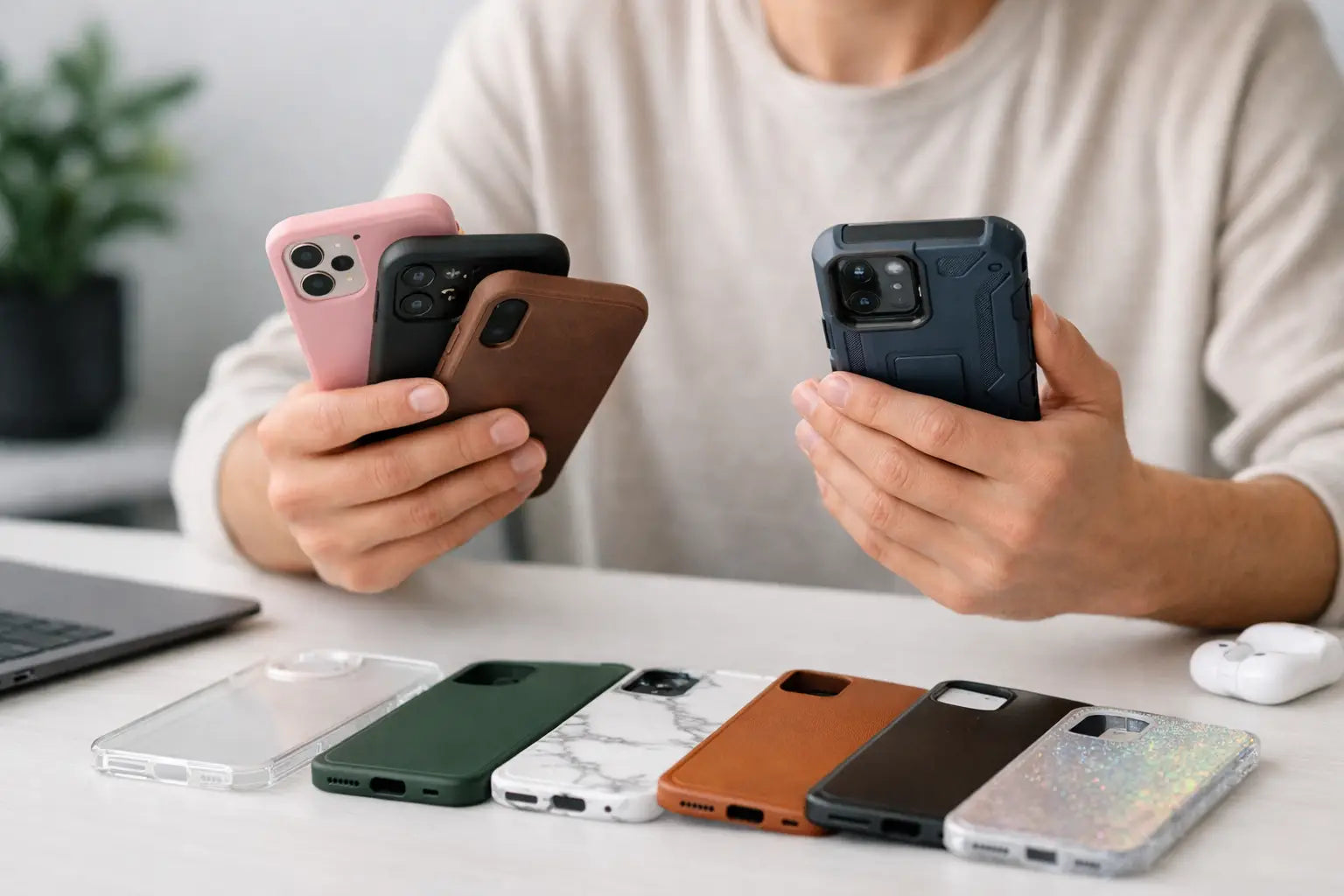
You usually only think about a phone case after the first drop, the first cracked corner, or the moment your phone slides off the sofa face-first. If you are wondering how to choose phone case options without wasting money on something flimsy, the right starting point is not colour or style. It is how you actually use your phone every day.
A good case should suit your routine, not just your handset. Someone commuting, working on site, handing their phone to kids, or constantly in and out of the car needs something different from someone who mainly uses their phone at a desk. That is why the best case is rarely the thickest or the cheapest. It is the one that gives you enough protection without making your phone awkward to hold, charge, or carry.
How to choose phone case for your routine
Before you look at materials or designs, think honestly about risk. If your phone lives in a handbag with keys, spends time on kitchen counters, gets used one-handed on walks, or ends up in the hands of children, your case needs more than a slim shell. If you mostly work indoors and want to keep the phone looking tidy without adding bulk, a lighter case may be enough.
This is where many people buy the wrong product. They shop for the phone they wish they had time to care for, rather than the life the phone actually has. A case that looks neat but cracks after a small fall is false economy. On the other hand, a very heavy-duty case can feel too bulky for pockets and daily use, which means some people remove it and end up with no protection at all.
Start with fit before anything else
The first rule is simple. Buy for the exact model, not just the brand. An iPhone 13 case will not necessarily fit an iPhone 14 properly, and even phones that look similar can have camera cut-outs, button positions, and speaker placement in different spots.
A poor fit causes more problems than people expect. Buttons become stiff, charging ports are awkward to access, the camera lip may sit unevenly, and the case can shift during a drop. If you use wireless charging or magnetic accessories, fit matters even more, because a slight mismatch can affect charging performance.
If you are not sure which model you have, check before buying. This is especially worth doing with Samsung, Xiaomi, Huawei, and other ranges where model names can be very close.
Signs of a properly fitted case
A well-fitted case sits snugly around the frame, leaves the camera and charging port neatly exposed, and keeps button covers responsive. It should not bow out at the corners or feel loose when you twist it lightly in your hand.
If the case is difficult to remove, that is not always a bad sign. Slightly firm is often better than too loose, as long as it does not put pressure on the screen protector or lift at the edges.
Choose the right level of protection
Protection is not one single thing. A case can protect against scratches, minor drops, hard corner impacts, or general wear. Some do one job well and another poorly.
Slim silicone or TPU cases are popular because they are affordable, light, and grippy. For many people, they are a sensible middle ground. They protect against daily knocks and reduce the chances of the phone slipping from your hand or off a table. They are not always the best option for repeated drops onto concrete, but for normal everyday use they cover a lot of ground.
Hard plastic cases can look smart and keep the phone lightweight, but some are less forgiving on impact. If you want a hard-back style, it helps to choose one with shock-absorbing edges rather than a rigid shell all over.
Rugged cases offer the highest level of protection, usually with reinforced corners and raised edges. They suit people who work outdoors, travel a lot, or know they are hard on their devices. The trade-off is bulk. Your phone will feel bigger in the hand and may not slip into a jeans pocket as easily.
Folio or wallet cases add screen cover protection and can be useful if your phone shares space with keys, coins, or other items. Some people like the all-in-one convenience for cards and cash. Others find the flap annoying when taking calls or photos. It depends on your habits.
Don’t ignore grip and feel
A case can have decent drop protection and still be annoying to use. Grip matters because preventing drops is better than surviving them.
Smooth glossy cases often look good on day one, but they can feel slippery, especially if your hands are dry or you are rushing. Soft-touch finishes, textured sides, and slightly raised edges usually feel more secure. If you use your phone one-handed a lot, this matters more than you might think.
Feel also affects whether you keep the case on. If it catches in your pocket, feels too sticky, or adds too much thickness around the buttons, it becomes a daily irritation. For most people, the best case is one they stop noticing after a day or two.
Raised edges are worth having
If you want real-world protection, look for a case with a small raised lip around the screen and camera. This helps keep the glass from making direct contact with flat surfaces.
It is not a guarantee against damage, especially on uneven ground, but it adds a useful layer of defence. This is particularly important now that camera bumps are larger on many newer phones. A case that leaves the camera area too exposed is not doing its full job.
Case and screen protector should work together
If you use a screen protector, make sure the case does not push against its edges. Some very tight cases can cause lifting or bubbling, especially with tempered glass. A good combination should sit cleanly together without pressure points.
For many buyers, a case and screen protector make more sense together than spending money on either one alone. One protects the body and corners, the other protects the surface you touch most.
Style matters, but be realistic
There is nothing wrong with choosing a case because you like how it looks. You see it every day. But style should come after the basics.
Clear cases are popular because they show off the phone’s original finish. They work well if you want a simple look, but cheaper clear cases can yellow over time. That does not mean all clear cases are poor quality, just that material quality matters.
Coloured silicone cases are easy to match to your taste and usually offer good grip. Darker shades tend to hide wear better. Lighter colours can look great, but they may show marks more quickly if your phone spends a lot of time in bags, cars, or workspaces.
Leather-style wallet cases can look smart and practical, especially for work or travel, but they are not for everyone. If you use contactless payments, mounts, or quick photo access often, a folio design can feel slower.
Think about charging and accessories
A case should fit into the rest of your setup. If you use wireless charging, magnetic mounts, ring holders, or car cradles, check compatibility before you buy.
Some thick rugged cases reduce wireless charging efficiency. Some magnetic accessories work best only with specific case types. If you regularly charge with a cable, make sure the port cut-out is wide enough for your usual charger, especially if you use a sturdier braided cable.
This is one of those small details that becomes annoying very quickly. A protective case is not much use if you have to force your charger in every evening.
Price should match the phone and the risk
Not everyone needs an expensive case, but the cheapest option is often poor value if it stretches, cracks, or discolours quickly. A sensible way to think about it is this: the more costly your phone is to repair or replace, the less sense it makes to protect it with something flimsy.
That said, paying more does not automatically mean better protection. Some pricier cases charge for branding or fashion rather than durability. A straightforward, well-made mid-range case is often the sweet spot for everyday users.
If you are replacing a case every few months because it wears out, spends its life slipping off corners, or never really fit properly, it is usually worth buying better once rather than cheaper twice.
How to choose phone case without overbuying
A lot of people end up with more protection than they need, then regret the bulk. Others buy the slimmest case possible and still worry every time the phone leaves their hand. The trick is to match the case to your habits, not to marketing claims.
If you drop your phone occasionally and want a clean everyday option, a quality TPU or silicone case with raised edges is often enough. If you work in busier, rougher environments or have already paid for one screen repair, a rugged design starts to make more sense. If your priority is carrying cards and covering the screen in a bag or coat pocket, a folio case may be the better fit.
For many customers, the safest choice is not the most extreme one. It is the one that balances grip, fit, protection, and price in a way that works every day. That practical approach is why many people buying accessories from local repair shops such as First Help Tech prefer advice based on how the phone is used, not just what is trending.
A phone case should make your life easier, not clumsier. If it fits properly, feels secure in the hand, and protects the parts most likely to take a hit, you are probably choosing well.