
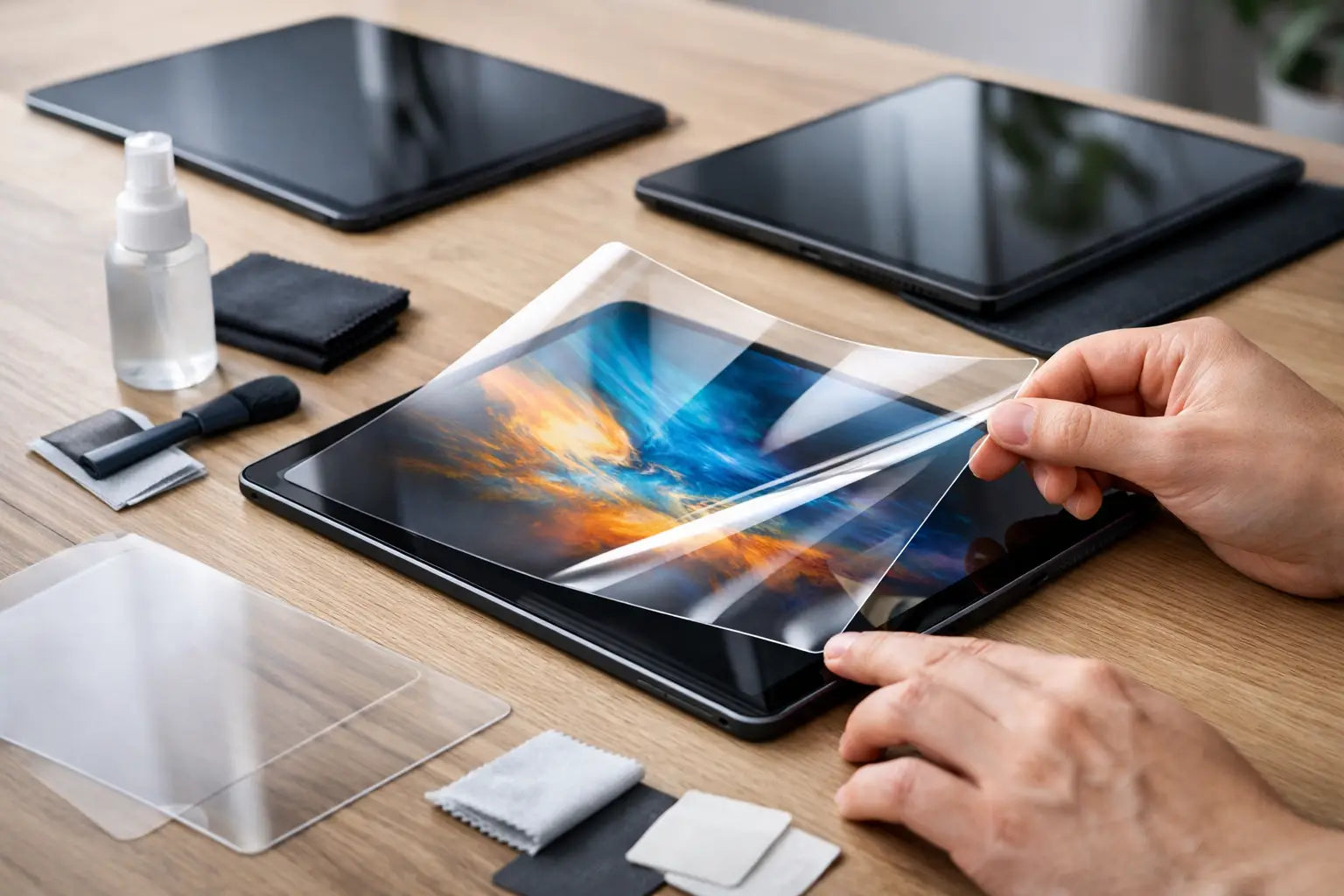
A cracked tablet screen usually starts with something small - a slip off the sofa, a school bag packed too tightly, or keys rubbing against the display on the way to work. That is why choosing the best tablet screen protectors matters more than most people think. A good protector will not make your tablet indestructible, but it can save you from scratches, reduce wear, and in many cases help you avoid a more expensive repair.
The right choice depends on how you actually use your tablet. A student carrying an iPad between lectures needs something different from a parent handing a tablet to a child in the car. Someone using a Galaxy Tab for work, video calls and emails will care about screen clarity, while an artist may prefer a protector with more grip for stylus use. There is no single perfect option for every device or every household, which is why it helps to understand the trade-offs before buying.
What makes the best tablet screen protectors worth buying?
A decent screen protector does three jobs. First, it takes the daily abuse that would otherwise mark the screen itself. Second, it adds a layer between the glass and common hazards such as grit, coins, zips and accidental knocks. Third, it can improve day-to-day use if you pick the right finish, whether that means cutting glare, resisting fingerprints or making writing with a stylus feel more natural.
What it cannot do is guarantee your screen will never crack. If a heavy drop lands at the wrong angle, the tablet can still be damaged. That said, a good protector often absorbs part of the impact and is far cheaper to replace than the display underneath. For most people, that alone makes it a sensible buy.
Price is another point people often get wrong. The cheapest option is not always false economy, but very low-cost protectors can come with weaker adhesive, poor edge fit or a finish that makes the display look dull. On the other hand, paying more only makes sense if the protector suits your device and how you use it. The goal is value, not just the highest price tag.
Tempered glass or film - which tablet screen protector is better?
For most buyers, this is the main decision.
Tempered glass
Tempered glass is the most popular option because it feels closest to the original screen. It is smooth, clear and usually the easiest to get used to. If you mainly watch videos, browse, shop online, answer emails or let the kids use the tablet for apps and streaming, tempered glass is often the best all-round choice.
It also gives stronger protection against scratches and light impact than standard plastic film. If a protector does break, it is usually the glass protector itself rather than the display below, which is exactly what you want.
The downside is that it can add a little thickness. On some tablets, especially with tighter-fitting covers, that can affect edge fit. Cheaper glass protectors may also chip at the corners over time.
Plastic film
Film protectors are thinner and often cheaper. They are useful if you want basic scratch protection without adding much bulk. They also suit some cases better because they sit flatter on the display.
The trade-off is durability. Film is less resistant to heavier knocks and can mark more easily. It may also feel less smooth under the finger, depending on the finish. For light home use, that may be perfectly fine. For school, travel or shared family use, glass tends to be the safer bet.
Paper-feel protectors
If you write or draw regularly on your tablet, a paper-feel protector can make sense. These are designed to add texture, giving the stylus more grip and control. That can make note-taking feel more natural, especially for students and designers.
The catch is that paper-feel finishes usually reduce some sharpness and can make colours look slightly less crisp. If your tablet is used mainly for films or photo viewing, you might notice that compromise. It depends whether writing comfort matters more than display clarity.
Best tablet screen protectors for different types of users
The best buy is usually the one that matches your routine rather than the one with the flashiest packaging.
For families and children
If the tablet is shared around the house or used by children, tempered glass is the practical choice. Tablets used for cartoons, games and school apps tend to be handled roughly, left on couches, carried around and dropped more often than anyone admits. In that situation, durability matters more than premium feel.
Look for a protector with good edge coverage and a fingerprint-resistant coating. You will still want a proper case as well. A screen protector helps with the front, but it will not protect the corners or back on its own.
For students
Students need a balance of protection, value and everyday usability. A good tempered glass protector suits most people, especially if the tablet is being carried in a backpack with books and chargers. If the tablet doubles as a notebook and stylus device, a paper-feel option may be worth considering instead.
This is one of those it depends cases. If your tablet is mainly for lecture notes and coursework, stylus texture matters. If it is more for Netflix, reading and browsing between classes, glass is usually the better fit.
For work and business use
For emails, meetings, quotes, stock checks or point-of-sale tasks, screen clarity and touch response are the priorities. Tempered glass works well here because it keeps the display looking sharp and feels natural during repeated use.
An anti-glare version can also help if you work near windows or under harsh indoor lighting. Just bear in mind that anti-glare finishes sometimes slightly soften the screen image. For many people, reduced reflection is worth that small trade-off.
For artists and note-takers
Paper-feel protectors are built for this crowd. If your tablet is a creative tool rather than just a screen, the extra friction can make long sessions more comfortable and precise. Many people who use a stylus every day find smooth glass too slippery.
Still, not every artist likes the same feel. Some prefer the cleaner look of glass and simply adjust their technique. If possible, think about whether your tablet is more often used for drawing or for media before deciding.
What to check before you buy
Start with compatibility. Tablet screen protectors are device-specific, and even small differences between generations can affect camera cut-outs, speaker holes and edge alignment. Always match the exact model, not just the brand name.
Then check the finish. Clear glass is best for most users. Matte or anti-glare protectors help in bright conditions but can reduce sharpness a bit. Paper-feel is great for stylus use but less ideal for pure entertainment.
It is also worth paying attention to installation kit quality. A protector with cleaning wipes, dust stickers and alignment tools makes life easier. Most bad reviews about screen protectors come down to poor fitting rather than poor protection. Dust trapped underneath, bubbles and crooked alignment can ruin the result even if the product itself is decent.
If you are using a heavy-duty case, think about case compatibility too. Some edge-to-edge protectors can lift at the corners when paired with a snug case. A slightly smaller protector with better fit is often more practical than one that claims maximum coverage but peels within days.
Common mistakes people make with tablet screen protectors
One mistake is assuming any protector will do as long as it matches the size. Tablets need exact fit, especially around cameras and sensors. Another is ignoring how the tablet is used. A glossy glass protector may look best on paper, but it is not always the best choice for someone writing notes all day.
People also underestimate installation. Fitting a screen protector in a dusty room, rushing the process or skipping the cleaning step usually ends badly. Taking a few extra minutes matters.
Finally, some buyers rely on the protector alone and skip the case. That leaves the tablet exposed around the frame and corners, which are often the first points of damage in a drop. Protection works best as a combination, not a single fix.
Are the best tablet screen protectors expensive?
Not necessarily. For most users, the sweet spot is a mid-range protector that fits properly, feels good to use and comes from a supplier that clearly lists compatible models. You do not need the most expensive option to get reliable everyday protection.
What matters more is buying from a place that supports the practical side of the purchase - clear device matching, decent stock, fair pricing and help if you are not sure which option suits your tablet. That is often more useful than paying extra for branding alone.
If you are buying for a household with multiple devices, it can make sense to keep protection simple. A durable glass protector for general use, and a paper-feel version only where stylus work genuinely justifies it, is a sensible approach that avoids overspending.
A tablet earns its keep when it is ready to use, not sitting aside with a damaged screen or a protector that never suited it in the first place. Pick the option that matches your routine, fit it properly, and you give your device a much better chance of staying clear, tidy and useful for longer.