

An HbA1c result and a blood glucose check answer different questions. The Hoco HbA1c comparison is about timescale: HbA1c reflects average blood glucose over the preceding months, while a blood glucose test measures the level at the time of the test. A finger-prick check is one way to measure that current level.
It’s easy to treat the results as interchangeable, especially when both relate to blood glucose. But each provides a different view, so knowing what they measure helps explain why both may be used.
Here, we explain how HbA1c testing differs from blood glucose tests and finger-prick checks, what each result can tell you, and how the tests fit together. You’ll have a clearer picture of the distinction and the questions to discuss with your healthcare team.
Key Takeaways
- Understand why HbA1c reflects average blood glucose over the preceding months, rather than a single moment.
- See how a blood glucose test captures a current reading and how a finger-prick check is used.
- Learn why these tests provide different information and how that distinction helps you interpret results.
- Find out when more frequent HbA1c checks may be considered, such as after a treatment change.
What are the Hoco HB1C specifications and features?
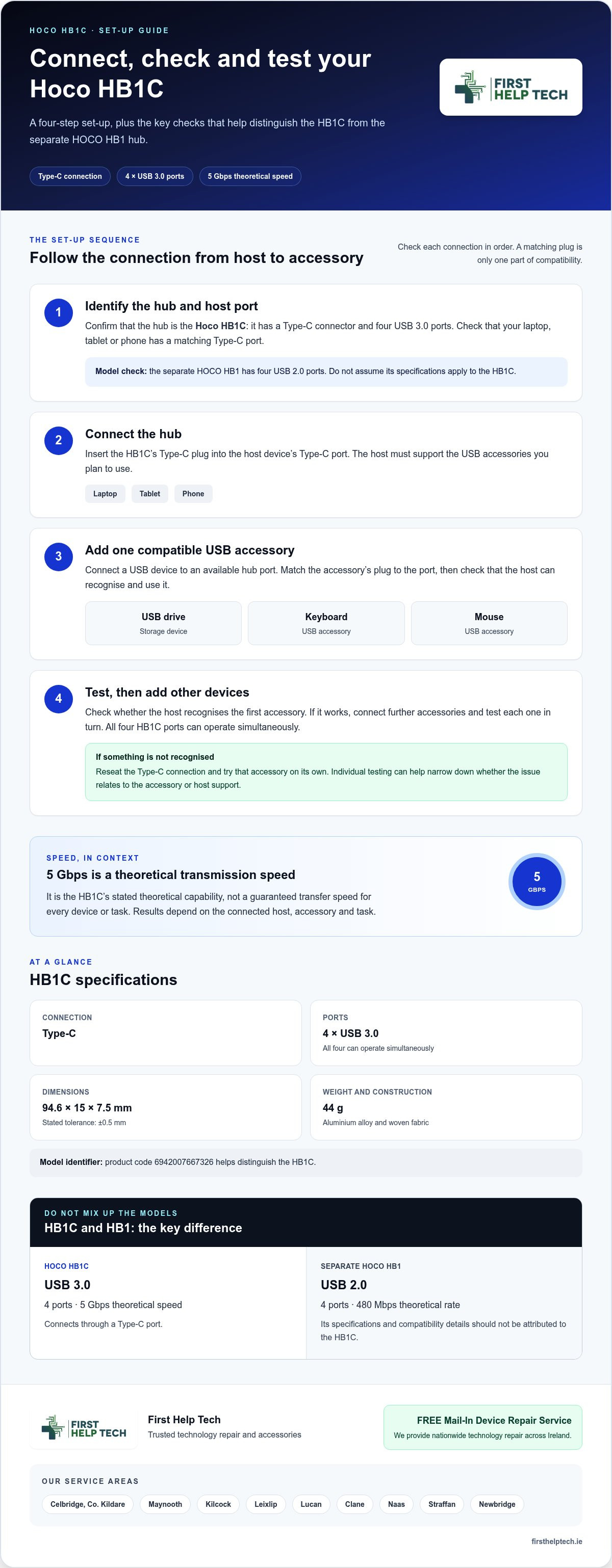
This Hoco HB1C hub connects to a Type-C port and provides four USB 3.0 ports. Its stated theoretical transmission speed reaches 5 Gbps. That figure describes the hub’s theoretical capability, not a guaranteed speed for every device or task.
The slim design measures 94.6 × 15 × 7.5 mm and weighs 44 g. Its body combines aluminium alloy with woven fabric. The stated dimensional tolerance is ±0.5 mm, allowing small measurement variations. For the Hoco HB1C, product code 6942007667326 helps distinguish this model when identifying it.
- Four USB 3.0 ports: all four can operate simultaneously.
- Type-C connection: links the hub to a device with a compatible port.
- 5 Gbps theoretical speed: gives its stated transmission ceiling.
- Aluminium alloy and woven fabric: make up its construction.
Using all four ports together lets you connect a keyboard, mouse, USB drive and another peripheral. The host still needs a suitable Type-C port, and each accessory must be compatible with that device. The stated speed does not mean every connected accessory will transfer data at that rate.
Don’t confuse this model with the separate HOCO HB1 Type-C hub. The HB1 has four USB 2.0 ports and a theoretical rate of 480 Mbps, unlike the HB1C’s USB 3.0 ports and 5 Gbps theoretical speed. Check the model name and product code to identify the specifications that apply.
The separate HOCO HB1 Type-C hub has a maximum working voltage of 5V and a maximum working current of 500mA. It can drive a mobile hard disk up to 1T. These are HB1 specifications, not stated power ratings for the HB1C.
The HOCO HB1 has four USB 2.0 ports, and all four can be used simultaneously. The Hoco HB1C instead provides four USB 3.0 ports, also usable at the same time, and connects to a Type-C port. Keeping the model names distinct helps prevent the HB1’s power and storage details from being attributed to the HB1C.
What devices are compatible with the Hoco HB1C?
The Hoco HB1C connects through a Type-C plug, so the host device needs a matching Type-C port. That may be a laptop, tablet or phone with this connection. The port is only the first check: the device must also support the USB accessories you plan to connect. A matching connector alone doesn’t mean every operating system or peripheral will work.
Consider the host and accessory together. A USB storage device, for example, needs a plug that fits the hub, and the host must recognise it. The same applies to a keyboard or mouse. The Hoco HB1C provides a connection point, but the host’s software and the accessory’s requirements also affect whether they work together.
- Host connection: check for a Type-C port on the laptop, tablet or phone.
- Accessory connection: match the accessory’s USB plug to an available hub port.
- Device support: ensure the host can recognise and use that accessory.
Keep model details separate. The HOCO HB1 and HB1C are different hubs, so the HB1’s compatibility information doesn’t automatically apply to the HB1C. The HB1 is listed as compatible with Android 4.2 or above, and with Apple and Huawei notebooks. Those details refer to the HB1 model.
The distinction matters because the HB1 also uses USB 2.0 ports, whereas the HB1C uses USB 3.0 ports. Don’t rely on an HB1 compatibility listing to decide whether a particular HB1C setup will work. Identify the hub’s exact model marking, then compare its Type-C connection with the device and accessories you intend to use.
Separately, a high HbA1c indicates high average blood glucose over the preceding months and may increase the likelihood of problems with the eyes, heart, feet, nerves, kidneys, or liver. The possible problems named include the eyes, heart, feet, nerves, kidneys, and liver. Just as nerve and vascular health require careful monitoring, looking after your broader sensory wellbeing through specialist services like Ear and Hearing helps ensure auditory concerns and ear health are addressed promptly.
How do you set up and use the Hoco HB1C?
Start by identifying the model. The HB1C has a Type-C connector and four USB 3.0 ports. Check the hub’s name before connecting it, as the separate HOCO HB1 has different specifications. Then check that your laptop, tablet or phone has a matching Type-C port.
- Connect the hub: insert its Type-C plug into the host device’s Type-C port.
- Add one accessory: connect a compatible USB device to one of the four hub ports.
- Test the connection: check whether the host device recognises that accessory.
- Add other devices: connect further accessories and test each one in turn.
Testing accessories individually can help narrow down a connection issue. For example, if a USB drive works but a keyboard doesn’t, the cause may relate to the accessory or host support. The hub allows all four USB ports to be used simultaneously, but that doesn’t mean every connected device will work with every host.
The HB1C’s stated theoretical transmission speed is 5 Gbps. Actual transfers depend on the connected host, accessory and task, so the figure shouldn’t be treated as a guaranteed speed. If a device isn’t recognised, reseat the Type-C connection and try that accessory on its own. A matching plug is only one part of compatibility.
The HOCO HB1 is listed as supporting plug-and-play use and hot swapping. Those details apply to the HB1, so don’t assume they describe the HB1C. If your phone, tablet or computer has a damaged port or connection problem, request a technology repair quote.
First Help Tech: Mobile Phone Repairs
First Help Tech provides mobile phone repairs, as well as tablet, laptop and computer repairs. If a device fault disrupts everyday use, our repair service can help. We also sell accessories for phones and tablets.
Operating on a nationwide basis right across Ireland, we offer a convenient FREE Mail-In Device Repair Service, ensuring customers everywhere can easily access our professional technology repair solutions.
Contact First Help Tech or visit firsthelptech.ie to discuss a repair.
Take the next step with confidence
If a connected accessory keeps failing, note which device and connection are involved before deciding what needs attention. This can help separate a hub-related issue from a problem with the phone, tablet or computer itself. For the Hoco HB1C, a clear description of the symptoms gives a useful starting point for discussing the device concern.
Where the host device has a damaged port or another fault, our technology repair service can help identify the appropriate next step. First Help Tech supports customers with device repairs, not medical testing or interpretation of HbA1c results. For practical help with a phone, tablet or computer fault, contact First Help Tech to request a repair quote. We’re here to help you move forward with a clearer plan.
Frequently Asked Questions
What kind of device is this?
The Hoco HB1C is a USB hub, not an HbA1c blood test or glucose monitor. It connects USB accessories to a device through a Type-C port. For example, the Hoco HB1C can provide a connection for a USB keyboard or storage device when the host supports that accessory. It doesn’t measure blood glucose or diagnose diabetes.
What warranty and support does Hoco offer for the HB1C?
The Hoco HB1C is listed with a two-year warranty. The material gives no details about Hoco’s support services.
Are there any common issues or safety concerns with the Hoco HB1C?
Compatibility can be an issue: the host needs a Type-C port and must support each accessory. The stated 5 Gbps speed is theoretical, not guaranteed.