
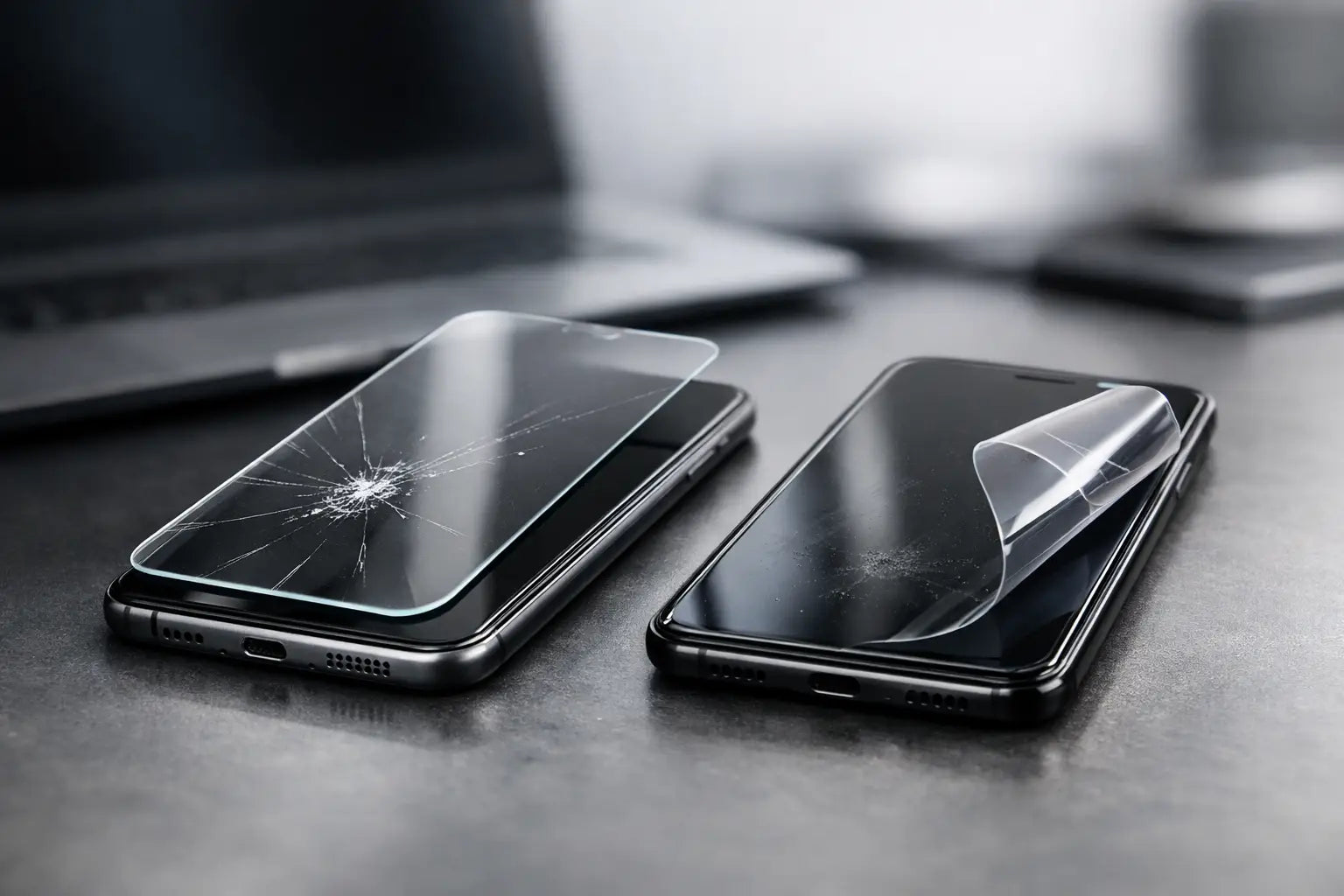
You usually only think about screen protection after the first scratch, the first drop, or that moment your keys and phone end up in the same pocket. When people ask about tempered glass versus plastic protector, they are normally not looking for theory. They want to know which one is worth buying, which one lasts, and which one gives the best value for the device they use every day.
The short answer is that tempered glass suits most people better. It feels more like the original screen, offers stronger impact resistance, and is easier to live with over time. Plastic protectors still have their place, though, especially for curved screens, lighter budgets, or anyone who mainly wants scratch protection rather than drop protection.
Tempered glass versus plastic protector: what is the real difference?
Tempered glass protectors are made from specially treated glass that is designed to take impact and resist scratches better than basic film. They are usually thicker than plastic, but not by much in day-to-day use, and they sit on the screen with a smooth, glass-like finish that feels close to the phone’s original display.
Plastic protectors are typically made from PET or TPU film. PET is the simpler, thinner type, while TPU is softer and more flexible. That flexibility is useful on curved displays or awkward screen shapes where a rigid glass protector may not fit properly. Plastic tends to be lighter and cheaper, but it does not feel as premium and it marks more easily.
For most phone users, the biggest difference is not the material itself. It is the experience. Glass feels cleaner, clearer and more natural under your finger. Plastic can feel slightly tacky or rubbery, and over time it is more likely to show scuffs, dents or peeling edges.
Which one protects better?
If your main concern is drops, tempered glass is usually the better choice. It is built to absorb part of the shock from impact, and in many cases the protector cracks instead of the screen underneath. That does not mean it makes your phone indestructible, but it can make a costly accident much cheaper to deal with.
Plastic is better described as scratch protection first and impact protection second. It can help prevent surface wear from coins, keys and general use, but it will not offer the same buffer in a fall. If you drop your phone often, or if your children use your tablet, plastic may not be enough on its own.
That said, impact protection also depends on the phone case. A good case and a good protector work together. Even the best glass protector cannot do much if the phone lands hard on an exposed corner and the force transfers directly through the frame.
Scratch resistance is not the same as drop resistance
This is where people get caught out. A plastic protector may stop light scratches just fine, and for some users that is all they need. But if you expect it to deal with sharp knocks or tiled-floor drops, you may be disappointed.
Tempered glass tends to hold up better against everyday abrasion too. If you are constantly taking your phone in and out of a handbag, pocket or work jacket, glass usually stays looking better for longer.
How they feel in daily use
This matters more than many buyers expect. You use your phone screen all day, so the protector should not make the device annoying to use.
Tempered glass normally wins on touch feel. It is smoother, more solid and more like the original display. Swiping, typing and tapping generally feel more accurate. If you use your phone for work, messaging, banking, maps or a lot of scrolling, the better feel is noticeable.
Plastic protectors vary a lot. Some are fine, especially higher-quality TPU films, but many feel softer under the finger. That can create a drag effect when scrolling. On some cheaper films, fingerprint marks build up faster and the screen can look worn quite quickly.
Clarity is another point. Good glass protectors are usually very clear and do not affect the display much. Plastic can sometimes slightly dull the image or show more texture in bright light. It is not always a deal-breaker, but if you paid good money for a sharp OLED display, it makes sense to choose a protector that does it justice.
Tempered glass versus plastic protector on curved screens
This is one of the few areas where plastic often makes more sense. Curved screens can be awkward for tempered glass because the protector may not sit flush at the edges. That can lead to lifting, poor adhesion or reduced touch sensitivity depending on the model.
Plastic film, especially TPU, can flex around curves more easily. If you have a handset with a heavily curved edge display, a plastic option may give you better overall coverage and fewer fitting issues. It may not feel as nice as glass, but a protector that fits properly is better than one that starts lifting after a few days.
This is why there is no one-size-fits-all answer. The best choice depends on the phone model, the shape of the screen and how the device is actually used.
Installation and replacement
Tempered glass is often easier to install neatly because it is rigid. Once aligned, it drops into place more cleanly than a thin film. Many people find they get fewer bubbles with glass, and if it goes on straight the first time, the end result usually looks tidier.
Plastic can be trickier. It bends, shifts and can trap bubbles more easily during fitting. Some films improve after a day or two as the adhesive settles, but first impressions are not always great. If you are not confident fitting one yourself, professional installation can save hassle.
Replacement is another point worth considering. A cracked glass protector looks dramatic, but replacing it is usually straightforward. With plastic, wear tends to build gradually - scuffs, peeling corners, cloudy patches - and people often put up with a tired-looking protector longer than they should.
Cost matters, but so does replacement frequency
Plastic protectors are usually cheaper upfront. That makes them appealing if you are trying to keep costs down or protect several family devices at once. But if you replace them more often because they scratch, peel or lose clarity, the value gap may not be as big as it first appears.
Tempered glass costs a bit more, but many users find it lasts longer and feels better throughout that time. If you look at price over months of use rather than the till price alone, glass often comes out better value.
Who should choose tempered glass?
Tempered glass is the safer bet for most people. If you use your phone heavily, want a more natural screen feel, or need stronger protection against knocks and drops, it is usually the right choice. It also suits anyone who wants their device to stay looking tidy rather than marked up after a few weeks.
Students, busy parents, tradespeople, commuters and anyone who keeps a phone in a pocket or bag all tend to benefit from glass. The same goes for tablets used around the house, where accidental drops are common.
If you have a standard flat-screen phone and you want the simplest recommendation, go with tempered glass and pair it with a decent case.
When a plastic protector is the better option
Plastic still makes sense in a few situations. It is useful for curved displays, lower-cost devices, temporary cover, or users who are mainly trying to stop minor scratches. It can also suit people who want the thinnest possible layer on the screen and are not too concerned about impact protection.
For older phones, budget handsets or secondary devices, plastic may be the more sensible spend. If the device is not worth investing much into, a basic film can still help keep the screen cleaner and more presentable.
It also works for customers who simply want an affordable fix quickly. That practical side matters. Not every purchase needs to be premium if the goal is just to keep a device going without spending more than necessary.
The better question is how you use your device
When choosing between tempered glass versus plastic protector, think less about marketing claims and more about your routine. Do you drop your phone? Does it live in your pocket with keys? Is the screen curved? Do you care how smooth it feels? Are you protecting a new flagship or just stretching the life of an older handset?
Those answers matter more than the packaging. For most users, tempered glass gives the better balance of protection, feel and long-term value. Plastic earns its place when fit, flexibility or budget matters more.
If you are unsure, it is worth asking before buying, especially for curved or less common models. Getting the right protector first time is cheaper than replacing the wrong one twice. A good screen protector should do one simple job well - help your device last longer without making it a nuisance to use.
The best choice is the one that matches your phone, your habits and your budget, so you can get on with using your tech instead of worrying about the next knock.