
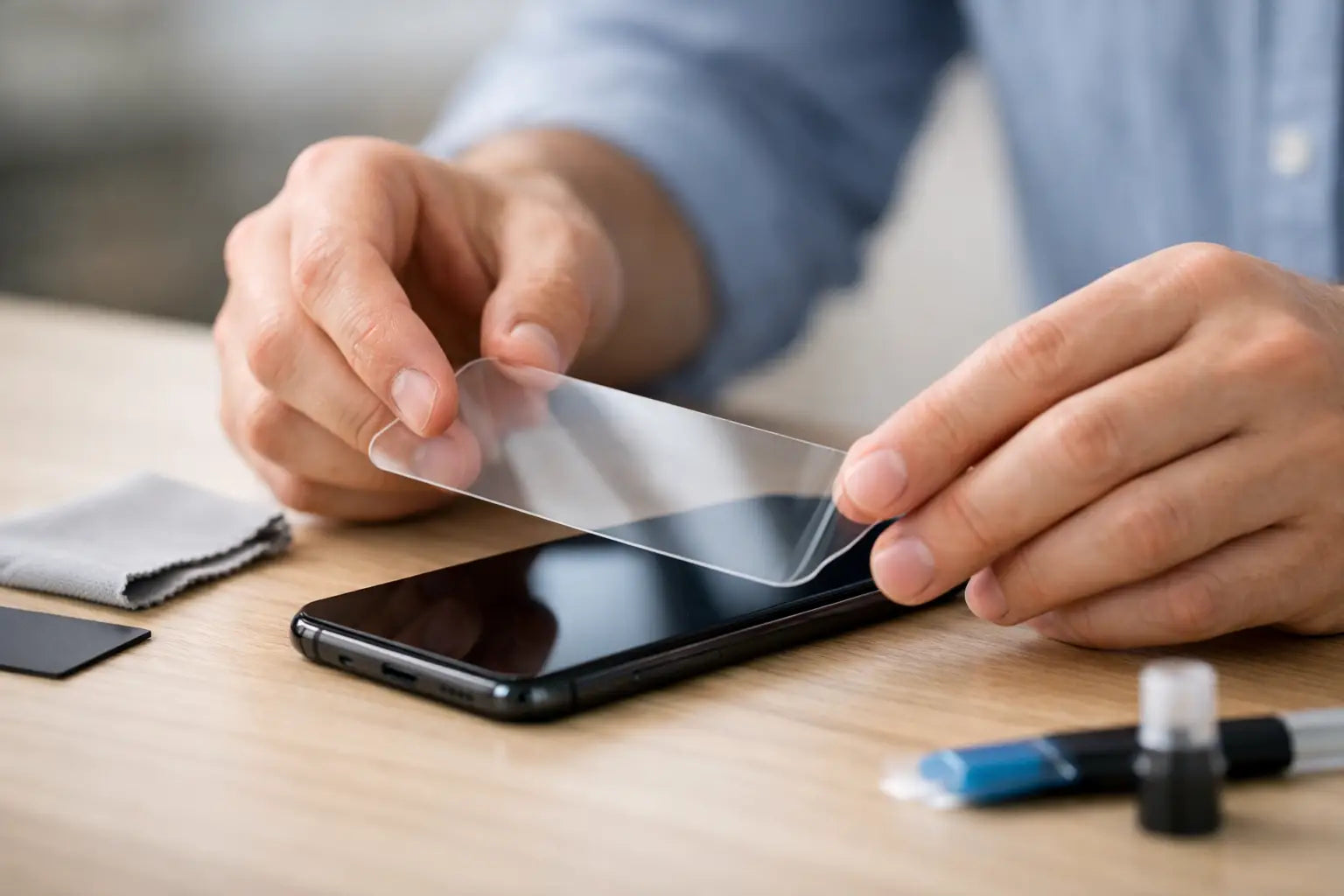
A phone screen usually doesn’t crack in dramatic fashion. More often, it’s one quick slip getting out of the car, a drop onto the kitchen tiles, or keys rubbing against the glass in a crowded pocket. If you’re wondering how to protect phone screen damage properly, the good news is that a few simple choices make a real difference - and they cost far less than a screen repair.
Most screen damage happens because people rely on one layer of protection and assume that’s enough. A screen protector helps, but it won’t do everything on its own. The same goes for a case. Proper protection comes from combining the right accessories with better day-to-day habits.
How to protect phone screen without overpaying
The first thing to get right is your expectation. No accessory can promise a screen will never break. A hard drop at the wrong angle can still crack even a well-protected phone. What good protection does is lower the odds, reduce impact force, and help avoid the small scratches that make a screen look worn long before the phone is due for an upgrade.
For most people, the best setup is simple: a tempered glass screen protector and a case with raised edges. That gives you front and back protection without making the phone bulky or awkward to use. If you buy only one or the other, you’re leaving a weak point exposed.
Cheap accessories can be a false economy here. A very thin case with no shock absorption may look tidy, but it won’t do much when the phone lands on a hard floor. Likewise, very low-quality screen protectors can lift at the corners, reduce touch sensitivity, or crack too easily. Paying a bit more for a proper fit usually saves money later.
Start with the right screen protector
If your main goal is to protect the display itself, tempered glass is usually the best choice. It feels closer to the original screen, offers better scratch resistance than basic plastic film, and takes the impact before the phone’s actual glass does. When it breaks, that’s often the point - it has absorbed part of the force.
Plastic film still has a place, but mainly for lighter scratch protection. It can help if you’re careful with your phone and just want to avoid marks from coins, keys, or general wear. It is less effective against harder knocks, so it suits low-risk users more than busy commuters, students, tradespeople, or parents with children grabbing the phone every five minutes.
Privacy protectors are another option, but they involve a trade-off. They limit viewing angles, which is useful on public transport or in shared spaces, but they can slightly reduce brightness and screen clarity. If you use your phone outdoors often, especially in bright Irish daylight when it does show up, that may annoy you more than you expect.
Fit matters as much as material. A protector designed properly for your model should sit neatly without blocking the front camera, lifting around curved edges, or interfering with a case. A bad fit collects dust, peels early, and leaves parts of the display exposed.
A badly fitted protector can cause problems
People often assume any protector that sticks on is fine. It isn’t. If there are air gaps, poor alignment, or weak adhesive at the corners, impact protection drops straight away. You also end up with that irritating edge lift that catches every bit of fluff from your pocket or bag.
If you’ve ever had a protector crack within days from a minor knock, poor quality or poor fitting is often the reason. The aim is not just to cover the glass but to create a reliable sacrificial layer.
Your case matters more than you think
A screen protector helps with the front surface, but the case handles the drop. This is where many people go wrong. They pick a case based only on looks, then wonder why the phone still gets damaged after a short fall.
A good case should have raised edges around the screen and camera, decent corner protection, and enough grip that it’s less likely to slip in the first place. Corners matter because they are common impact points. If the phone lands on a corner, force travels through the frame and can crack the display even if the front doesn’t hit flat on the ground.
Slim cases are popular because phones are already large enough. That makes sense, but there is a balance. Ultra-thin cases may protect from scratches and light wear, but not much more. If you work on the move, travel a lot, or have a habit of dropping your phone, a slightly more protective case is worth it.
Wallet cases offer extra screen cover when closed, which can be useful in a bag or during travel. The downside is bulk. Some people also find themselves folding the cover back constantly, which gets old quickly. It depends on how you use your phone day to day.
Daily habits that actually prevent cracked screens
Accessories help, but habits are what stop repeat damage. A surprising number of cracked screens come from routine carelessness rather than bad luck.
Don’t keep your phone in the same pocket as keys, coins, or anything metal. Even if modern glass is fairly scratch resistant, it is not invincible. Fine scratches build up over time, and once the surface is marked, the screen can look older and be harder to read in bright light.
Be careful where you place it at home. Kitchen counters, bathroom sinks, sofa arms, and the edge of the bed are all classic danger spots. Phones slide more easily than people think, especially when they vibrate. One alert at the wrong moment and it’s on the floor.
If you use your phone in the car, use a proper mount rather than balancing it in a cup holder or on your lap. The same goes for the gym. A treadmill shelf, bench edge, or machine frame is not a safe storage spot, no matter how temporary it seems.
Cleaning the screen the right way
Cleaning matters too, because dirt trapped between your fingers, pocket, and glass can gradually wear the surface. Use a microfibre cloth and, if needed, a screen-safe cleaner. Avoid spraying anything directly onto the phone. Household cleaners can damage coatings and leave the display looking patchy.
It’s also worth removing the case now and then to clean out grit and dust. Tiny particles caught inside a case can rub against the phone frame and edges. That won’t always crack a screen, but it does add wear that people often miss until they take the case off months later.
How to protect phone screen if you have kids or a busy routine
Some phones live a harder life than others. If you have children using your device for videos, games, or school apps, screen protection needs to be stronger. The same applies if you’re working on the road, moving between sites, or constantly taking your phone in and out of pockets and bags.
In these cases, a tougher case with reinforced corners is usually the better choice, even if it adds a bit of size. A standard slim case may be fine in an office, but it’s not ideal if the phone regularly ends up on floors, seats, pavements, or under shopping bags.
It also helps to replace damaged accessories quickly. A cracked screen protector is better than a cracked screen, but once it’s broken, it’s done its job. Leaving it on for months won’t give you the same level of protection the next time the phone falls.
When it’s time to replace protection
A worn case or old protector can create a false sense of security. If a case has stretched corners, split edges, or gone smooth and slippery, it’s no longer doing the same job. If a protector is chipped, lifting, or heavily scratched, visibility and impact resistance are both reduced.
This is one of those areas where small maintenance prevents bigger cost. Replacing a tired case or protector is far easier than paying for a full display repair. For most people, that’s the practical answer - keep protection fresh rather than waiting until there’s visible damage to the phone itself.
If you’re unsure what fits your model properly, getting advice from a repair and accessories shop can save hassle. First Help Tech, for example, deals with both repairs and everyday protection, so it’s easier to match the right case and screen protector to how you actually use your phone rather than just picking the cheapest option and hoping for the best.
A protected phone still needs a bit of common sense. But if you use a decent tempered glass protector, pair it with a case that actually absorbs impact, and stop giving your phone risky places to fall from, you’ll avoid most screen damage before it starts.