
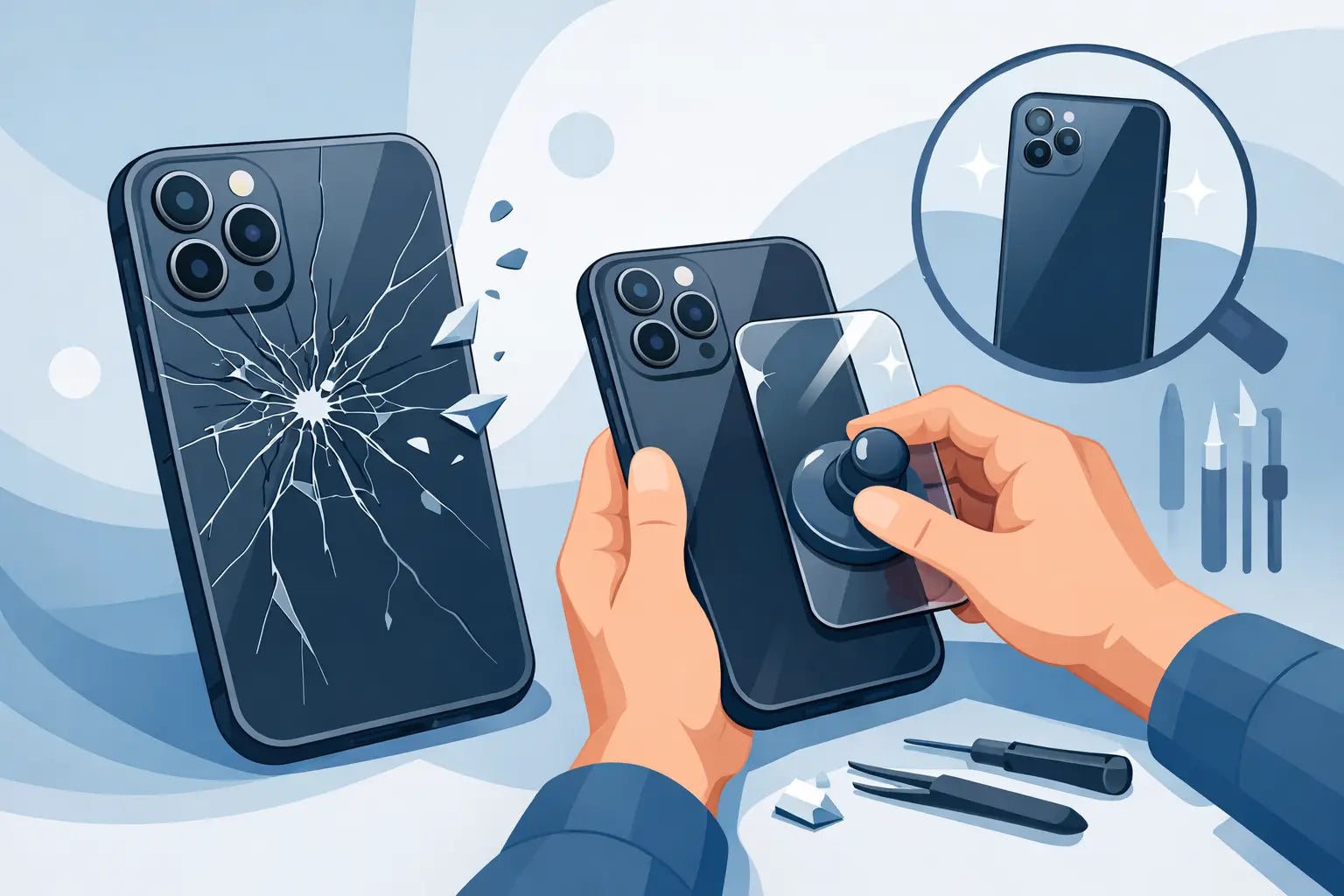
That first crack across the back of your phone is easy to ignore - until the glass starts flaking, the sharp edges catch your hand, or the phone stops feeling safe in your pocket. If you are looking up how to fix cracked phone back glass, the real question is usually this: can you sort it quickly and affordably, or are you about to make a small problem worse?
The answer depends on the damage, the phone model, and how comfortable you are opening modern devices. Back glass looks simple, but on many phones it is bonded down hard with strong adhesive, sits around delicate parts, and can affect wireless charging, sealing, and even camera performance if the repair goes badly.
How to fix cracked phone back glass without making it worse
If the crack is minor and the phone still works properly, your first job is damage control. A cracked back does not always mean the handset is unusable, but it does mean it is more vulnerable to moisture, dust and further breakage.
Start by removing the case and checking the full extent of the damage in good light. Hairline cracks are one thing. Loose shards, missing glass, exposed internals, or a raised rear panel are another. If the back glass is lifting, stop using pressure on the phone straight away. That can point to swelling from the battery, and that is not a DIY job.
If the damage is only cosmetic and you need a short-term fix, cover the area with a proper phone skin, a snug protective case, or clear packing tape as a temporary measure. Tape is not a repair, but it can stop loose fragments from falling out until the phone is properly dealt with. Keep it clean and dry, and avoid putting the phone in a crowded pocket or bag where pressure can spread the crack.
Can you repair cracked back glass yourself?
Sometimes yes, but it is not the straightforward fix many people expect. On older phones with removable backs, replacement was simple. On most newer devices, especially premium Samsung, iPhone, Huawei and other glass-backed models, the rear panel is glued into place and often needs heat, specialist tools and patience.
That means a DIY repair usually involves heating the adhesive, lifting broken glass piece by piece, cleaning the frame, fitting a new panel and applying fresh adhesive correctly. If you rush any of that, you can damage the camera lens surround, charging coil, flash cable, paint finish or internal flex cables.
For a lot of people, the better question is not whether a home repair is possible, but whether it is worth the risk. If your phone is expensive, still in daily heavy use, or includes wireless charging and water-resistant sealing, professional repair is often the safer value.
What you would need for a DIY repair
If you are set on doing it yourself, you will need more than just replacement glass. Most repairs need a heat source, suction tool, thin opening picks, precision tools, adhesive remover, replacement adhesive and eye protection. Broken back glass tends to splinter into tiny pieces, so this is not a kitchen-table job with a butter knife.
You also need the exact part for your model. That sounds obvious, but many phones have near-identical versions with different camera cut-outs, adhesive layouts or finish colours. Ordering the wrong back panel can leave you with wasted time and money.
The biggest DIY risks
The main risk is hidden damage. You might get the old glass off and still end up with a poor result if dust gets into the camera area, the new panel sits unevenly, or the adhesive bond fails after a few days. Even if the repair looks decent, the phone may no longer have any meaningful resistance to splashes or moisture.
There is also the battery risk. Heat is often necessary to soften adhesive, but too much heat in the wrong area can create a much more serious problem. If the battery is already compromised from a drop, applying pressure or heat can turn a cracked back repair into a safety issue.
When not to attempt how to fix cracked phone back glass at home
There are a few situations where DIY is best avoided. If the phone back is badly shattered, if glass has broken around the camera module, if the rear panel is separating from the frame, or if the handset has started overheating after the drop, leave it alone and get it checked.
You should also be cautious if the camera has gone blurry since the crack appeared. Sometimes that is just dirt on the lens cover, but sometimes the impact has affected the camera assembly or stabilisation. Replacing the glass alone will not fix that.
Another red flag is wireless charging not working. On many phones, the charging coil sits just under the back panel. A cracked glass repair may become a back glass plus internal part repair if the impact has travelled deeper than expected.
What a professional back glass repair usually involves
A proper repair is not just about sticking on a fresh panel. A technician will normally inspect the frame, check for internal damage, remove all broken material safely and fit the correct replacement with proper alignment and bonding.
On some devices, especially certain iPhone and Samsung models, the method varies depending on the design and available equipment. Some repairs are done by carefully removing the rear glass manually. Others may use specialist equipment to separate the damaged layer more cleanly. Either way, the point is the same - reduce the chance of further damage and restore the phone properly.
For most customers, the practical benefits are simple: less risk, cleaner finish, and faster turnaround than trying to source tools, watch tutorials, and hope the replacement part is right first time. If you rely on your phone for work, school runs, banking or everyday communication, that matters.
Is it worth fixing cracked phone back glass?
Usually, yes - but it depends on the age and value of the phone. If the handset is otherwise working well, replacing the back glass can be far cheaper than replacing the device. It also improves safety, comfort and resale value.
If the phone is already old, has battery issues, and needs multiple repairs at once, then the numbers may point the other way. In that case, getting a quote before spending money is the sensible move. A good repair shop will tell you plainly whether the repair makes financial sense.
There is also the case-only option. Some people choose not to repair minor cosmetic back damage and instead use a solid protective case for the rest of the phone's life. That can be reasonable if the crack is stable, the glass is not shedding, and you are not worried about appearance. It is not ideal, but for a lower-value device it can be the most budget-friendly choice.
How to protect your phone after the repair
Once the back glass is replaced, protect it properly. A quality case matters more than people think, especially one with raised edges and good corner protection. If the phone has a glass back, treat it like it has two vulnerable sides, not one.
It is also worth checking your charging habits. Loose cables, cluttered desks and charging on hard tile or stone surfaces all increase the chance of another drop. A simple grip accessory or a better-fitting case can make everyday use much safer.
If you are replacing the back glass because the phone slipped from your hand once, make sure the same thing is not waiting to happen next week. A small spend on protection is usually cheaper than another repair.
The practical choice for most people
If you came here searching how to fix cracked phone back glass, the honest answer is that there are two fixes, not one. The temporary fix is to make the phone safe to handle and prevent further damage. The proper fix is replacing the panel with the right tools and the right part.
For confident hobby repairers, DIY may be possible on some models. For most phone owners, especially if the device is still valuable and heavily used, professional repair is the more sensible route. It saves time, avoids guesswork and gives you a better shot at getting the phone back to normal without extra damage.
If you are unsure, ask for a quote before deciding. A straightforward answer on cost, part availability and turnaround can save a lot of hassle. At First Help Tech, that practical approach is what matters most - getting your device sorted quickly, safely and without spending more than you need to. A cracked back does not always mean a new phone, and that is often the best news of all.