
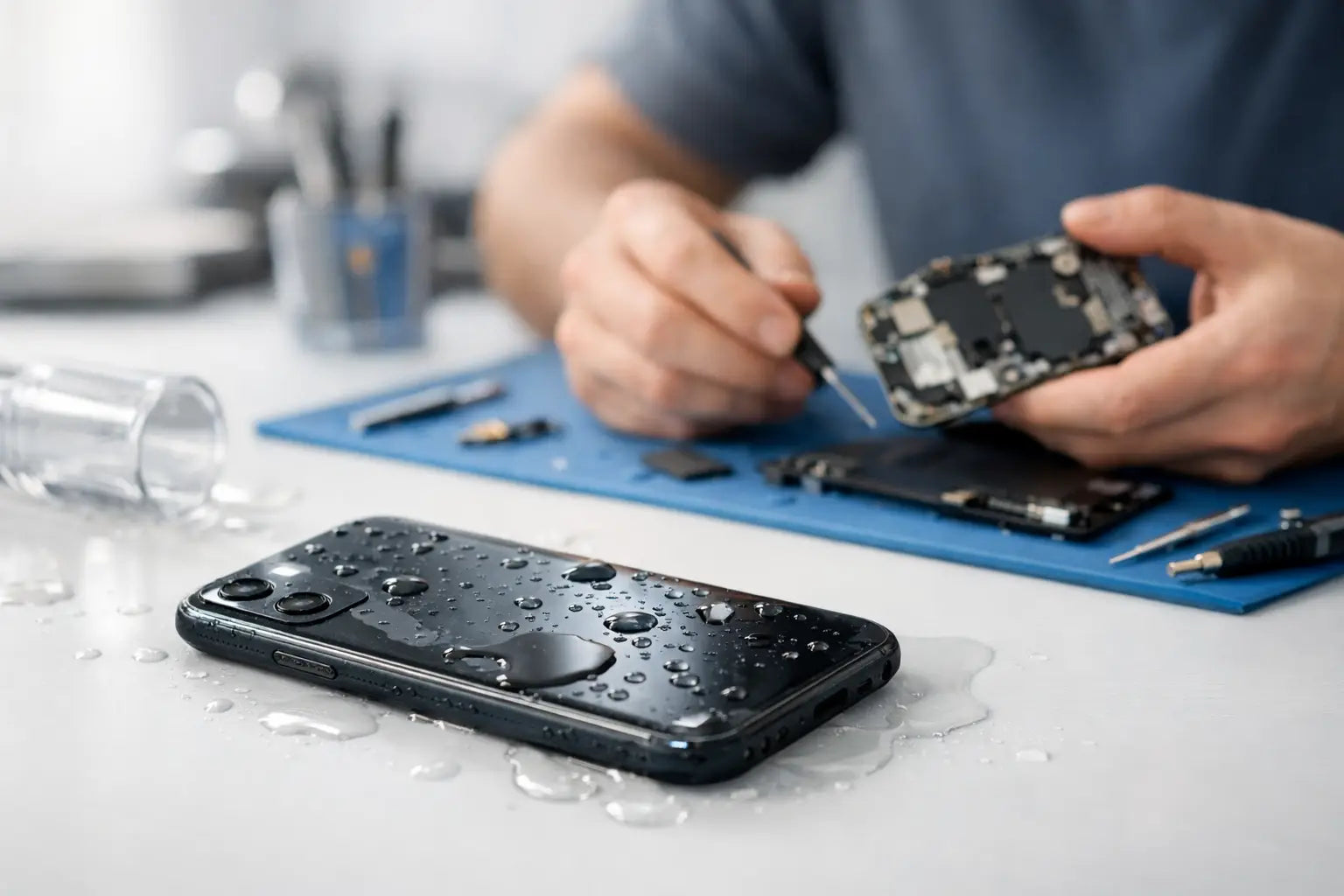
A phone slipping into a sink, puddle or toilet can go from annoying to expensive in seconds. The good news is that whether water-damaged phones can be repaired is not a simple yes or no - a lot depends on how much liquid got in, how quickly the phone was switched off, and what parts have been affected.
In many cases, a water-damaged phone can be repaired. In others, the damage spreads beyond a practical fix, especially if corrosion has already started on the board or key components have shorted. That is why the first few hours matter more than most people realise.
Can water-damaged phones be repaired after getting wet?
Sometimes yes, and sometimes only partly. A phone that was splashed lightly and powered down straight away has a much better chance than one left on, charging, or sitting wet overnight. Fresh water is usually less damaging than salt water, fizzy drinks, coffee or sugary liquids, which leave residue behind and can keep causing trouble even after the device looks dry.
What catches people out is that water damage is rarely just about visible moisture. The bigger problem is corrosion. Once liquid reaches the internal connectors, charging port, screen flexes, battery contacts or main board, metal parts can begin to corrode. That can lead to delayed faults such as random restarts, no sound, face recognition failing, poor charging, camera fogging or a screen that dies days later.
So yes, water damage can often be repaired, but the repair may involve more than drying the phone. It may need cleaning, testing and replacing damaged parts.
What you should do straight away
If your phone gets wet, speed matters. Switch it off immediately if it is still on. Do not keep pressing buttons to check if it works, and do not plug it in to charge. Electricity and moisture are a bad mix, and many phones that might have been saved are made worse by being powered on too soon.
Remove the case, SIM tray and any accessories. Gently dry the outside with a soft cloth. Then stop there. Do not use a hairdryer on high heat, and do not put the phone on a radiator. Heat can push moisture deeper inside or damage seals, adhesives and the battery.
The old rice trick is still popular, but it is not a real repair. Rice does very little for trapped liquid inside a modern smartphone, and it can give a false sense that the phone is safe to switch back on. Proper internal inspection is far more useful than hoping moisture disappears on its own.
Why some water-damaged phones are worth repairing and some are not
The value of the repair depends on the model, the type of damage and what stopped working. If the issue is limited to a charging port, screen, battery or earpiece, repair can be very worthwhile. If the main board has significant corrosion, multiple lines have shorted, or the phone is an older budget model, the cost can move too close to replacement.
Newer phones are often worth a proper assessment because replacing them is expensive. Even if full repair is not economical, there may still be a good chance of data recovery, which matters if photos, contacts, notes or business apps are stored on the device.
This is where a realistic quote helps. There is no point paying premium money to revive a phone that may remain unreliable. At the same time, writing off a device too quickly can cost more than necessary if the damage is limited and repairable.
Common signs of water damage
Some wet phones fail immediately. Others seem fine at first and develop faults later. That delay is one reason people are often unsure whether the damage is serious.
Typical signs include a phone not turning on, a black or flickering screen, charging that cuts in and out, muffled speakers, distorted microphone sound, camera misting, overheating, battery drain and touch problems. You may also notice a warning about moisture in the charging port. On some models, liquid contact indicators inside the SIM tray area can change colour, which is one clue that internal moisture has reached the device.
A single symptom does not always reveal the full damage. For example, poor charging might look like a simple port issue, but internal corrosion on the board could be the root cause. That is why inspection and testing matter.
How professionals repair water-damaged phones
A proper water-damage repair is about diagnosis first, not guesswork. The phone is opened, disconnected and checked for visible liquid, residue and corrosion. Internal parts may need to be removed so connectors and board areas can be cleaned and inspected properly.
Cleaning is usually the first stage. This helps remove residue and stop corrosion from continuing. After that, the device is tested component by component. A technician may identify one failed part, such as a screen or charging port, or a more serious board-level issue.
There is a trade-off here. Some phones recover after cleaning and minor part replacement. Others need board repair work, which can be more specialised and more expensive. The right choice depends on the model and the value of the phone.
Is it cheaper to repair or replace?
For many people, this is the real question. If a phone is relatively new, repair is often the cheaper option, especially when the damage is caught early. A targeted repair can cost far less than buying a new device, transferring data and replacing accessories.
If the phone is older, heavily corroded or already had battery or screen problems before the water damage, replacement may make more sense. There is also the issue of reliability. Even after successful repair, a badly soaked phone can carry some future risk if the damage was extensive.
A good repair shop should be honest about that. Not every water-damaged phone should be repaired, and not every successful power-on means the phone is truly healthy.
Can a water-damaged phone work again after days or weeks?
Sometimes, but delay usually makes things worse. The longer moisture or residue sits inside the phone, the more corrosion can spread. A device that might have needed a simple clean on day one may need multiple parts by day five.
That is especially true if the liquid was not plain water. Seawater, soft drinks, tea and coffee are far harsher on internal components. If your phone got wet and is still working, that is not a reason to ignore it. Intermittent faults often show up later.
For customers around Celbridge and across Ireland, quick assessment is usually the best way to avoid turning a smaller repair into a bigger bill.
What about waterproof phones?
Water-resistant is not the same as waterproof. Many phones have an IP rating, but those ratings apply under controlled conditions and do not guarantee protection in real-life accidents. Age, drops, previous repairs and worn seals can all reduce resistance.
A phone that survives a splash one month may fail after a short dip the next. Salt water and chlorinated water also create different risks than clean tap water. So even if your phone is marketed as water-resistant, do not assume it is safe once liquid has entered.
The biggest mistakes people make
The most common mistake is charging the phone too soon. The second is continuing to use it because it still seems normal. The third is relying on home fixes that do not address internal corrosion.
Another costly mistake is waiting for the phone to die before seeking help. By then, the damage may have spread to the point where repair is less certain or more expensive. If the data matters, that delay can reduce the chances of a clean recovery.
So, can water-damaged phones be repaired reliably?
They can often be repaired, but reliability depends on the extent of the damage and how quickly the phone was handled properly. A phone that gets fast professional attention has a much better chance than one left powered on in a wet bag or plugged in overnight.
The best approach is simple. Turn it off, keep it off, avoid home remedies, and get it assessed as soon as possible. At First Help Tech, this is the kind of issue where a straight answer matters - whether that means a cost-effective repair, a realistic quote, or honest advice that replacement is the better option.
If your phone has taken a spill, the right next step is not guessing. It is finding out what can still be saved before time does more damage than the water did.